Cash, Cards and Tips on a Dalyan Boat Day: How Paying Works
Not what the day costs, but how you pay for it: the stops that want cash, the tab on board and the question of tips.
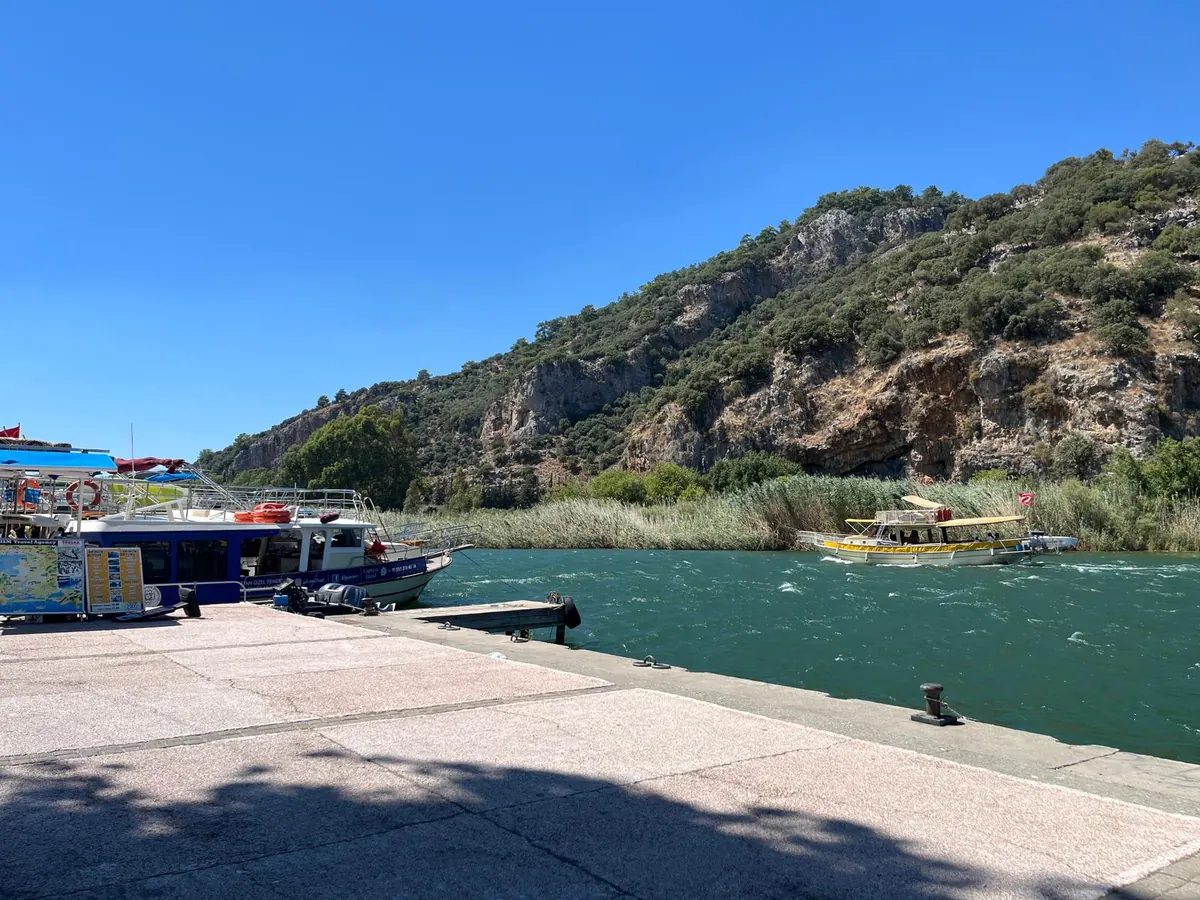
The most common small problem on a Dalyan boat day is not the weather or the timetable. It is standing at the mud baths or a beach kiosk with a card in your hand and no cash in your bag. It happens to someone on almost every boat, and it is entirely avoidable.
This is not a guide to prices, which change and depend on the trip. It is about the mechanics: where you will be asked to pay during the day, which of those places are likely to want cash, how drinks and extras are usually handled on the boat, and how tipping works in a place where it is appreciated but never demanded.
Pay for the trip and pay on the day are two different things
The boat trip itself is usually paid for when you book or at the start of the day, and this is the part most likely to accept a card, a bank transfer or payment through a travel company. That payment covers the boat and whatever the trip lists as included.
What it often does not cover is the smaller spending during the day. Entry at some of the stops, drinks on board, an ice cream at the beach, a towel you forgot to bring. These happen away from any office, sometimes at a simple kiosk or a gate, and that is where cash matters.
Before you set off, ask one question: what exactly is included, and what will we pay for separately? The answer tells you how much cash to bring. It is the most common reason two descriptions of the same trip seem to disagree.
Where cash is most likely to be needed
Every operator is different, and card machines have spread a long way in recent years. But on a river day, these are the places where visitors most often find themselves needing cash:
- Entry at the mud baths or thermal pools, if it is not included in your trip.
- Site entry at Kaunos, on trips that stop to visit the ancient city.
- Kiosks and small stalls at Iztuzu Beach.
- Drinks and snacks bought on board, depending on the boat.
- Lockers, showers or extras at the stops, where they are charged.
Which currency to carry
Carry Turkish lira. Some places in tourist areas will quote or accept euros or pounds, but the rate you get will almost always be worse than paying in lira, and small kiosks may simply not be able to give change in a foreign currency.
Small notes are more useful than large ones. A stall at the beach may struggle to change a large note first thing in the day. Break big notes at a shop or restaurant in town before you set off.
There are cash machines in the centre of Dalyan, near the river. Using one the evening before is far less stressful than looking for one at the quay ten minutes before departure. Check with your own bank what they charge for withdrawals abroad, and when a machine offers to convert the amount into your home currency, choosing to be charged in lira is usually the better deal.
How drinks on board are usually handled
Drinking water is commonly included on day trips. Soft drinks, beer and other drinks are often sold on board, and many boats keep a simple tab rather than taking money every time you order. You then settle up at the end of the day, before you step off.
This is convenient, but it catches people out when the end of the day arrives and the boat only takes cash. Ask at the start how drinks are paid for and whether a card is possible. If you are travelling as a family or a group, agree who is paying the tab so there is no confusion at the gangplank.
On a private boat the arrangement can be different, and drinks may be included, pre-ordered or brought by you. Settle this when you book rather than on the day.
Paying by card: what to check
- Ask whether the boat or office takes cards before you rely on it, not at the moment of paying.
- Carry a second card from a different bank in case one is declined.
- Tell your bank you are travelling so a payment from Turkey is not blocked.
- When a card machine offers to charge you in your home currency, choosing Turkish lira usually costs less.
- Keep your receipt, especially for anything paid in advance.
Tipping the crew
Tipping on a Dalyan boat is not compulsory, and nobody will chase you for it. It is, however, appreciated. Crews on day boats work long hours in the heat, cook lunch, help people on and off, keep an eye on children in the water and answer the same questions all day with good humour.
If the day went well, it is normal to leave something at the end. The usual way is to hand it to the captain or the crew member who looked after you as you leave, often with a word of thanks. Some boats have a tip jar near the gangplank. Either is fine.
There is no fixed amount and no need to calculate a percentage. Give what feels right for the day you had and the size of your group. A larger party that took more looking after may want to give a little more. If the day was poor, you are under no obligation.
Tipping elsewhere during the day
At the mud baths or the beach kiosks there is no expectation of a tip. In restaurants in town, leaving a little extra for good service is common, and in cafes rounding up is enough.
For a private transfer or a private boat, a tip to the driver or crew at the end is appreciated in the same way as on a shared boat, but again it is a thank-you rather than a charge.
Keeping money safe on the water
A boat day involves swimming, mud and sand, none of which are good for wallets or phones. Bring only what you need for the day. A small waterproof pouch for cash and a card is worth more than any bag.
Do not leave valuables unattended on the beach while the whole family swims. On board, crews are careful, but a boat is an open space full of people coming and going. Keep your pouch with you or ask the crew where it is sensible to leave it.
And remember the mud baths: jewellery, especially silver, should stay behind. The sulphur in the water can discolour it, and a ring is easily lost in the mud.
A simple checklist for the morning
Before leaving your accommodation, check four things. You know what is included in the trip. You have enough Turkish lira in small notes for entry fees, drinks and an ice cream. You have one card as a back-up. And your cash and card are in something that will survive water. With that done, money stops being something you have to think about for the rest of the day.
Frequently asked questions
Do I need cash for a Dalyan boat trip?
Usually some, yes. The trip itself may be paid by card, but entry at some stops, drinks on board and beach kiosks often work best, or only, with Turkish lira in cash.
Can I pay in euros or pounds in Dalyan?
Sometimes, but the rate is usually poor and small stalls may not give change. Paying in Turkish lira is simpler and normally cheaper.
Are there cash machines in Dalyan?
Yes, in the town centre near the river. Withdraw the evening before a trip rather than on the way to the quay.
Should I tip the boat crew?
It is not compulsory, but it is appreciated if you had a good day. Hand it to the captain or crew at the end, or use the tip jar if there is one. There is no fixed amount.
How do I pay for drinks on the boat?
Many boats keep a tab and you settle at the end of the day. Ask at the start whether cards are accepted so you are not caught without cash.
You may also want to read
Dalyan Day Boat Trip
The whole river in one day: tombs, sulphur pools and the long stop at Turtle Beach.
Trip detailsPrivate Boat Charter From Dalyan
The same river with the timetable removed. You set the stops and the hour you turn back.
Trip detailsThe Dalyan Mud Baths
Grey clay, a hot sulphur pool, and a smell that follows you home.
Read moreIztuzu Beach
Four and a half kilometres of sand between a river and the sea, with rules that are enforced.
Read moreWhat Sets the Price
Why two boats leaving the same quay on the same morning are not the same money.
Read more