Wind, Rain and Heat: What Actually Changes on a Dalyan Boat Day
The river and the sea react to weather very differently. Here is how to tell which of your plans is actually at risk.
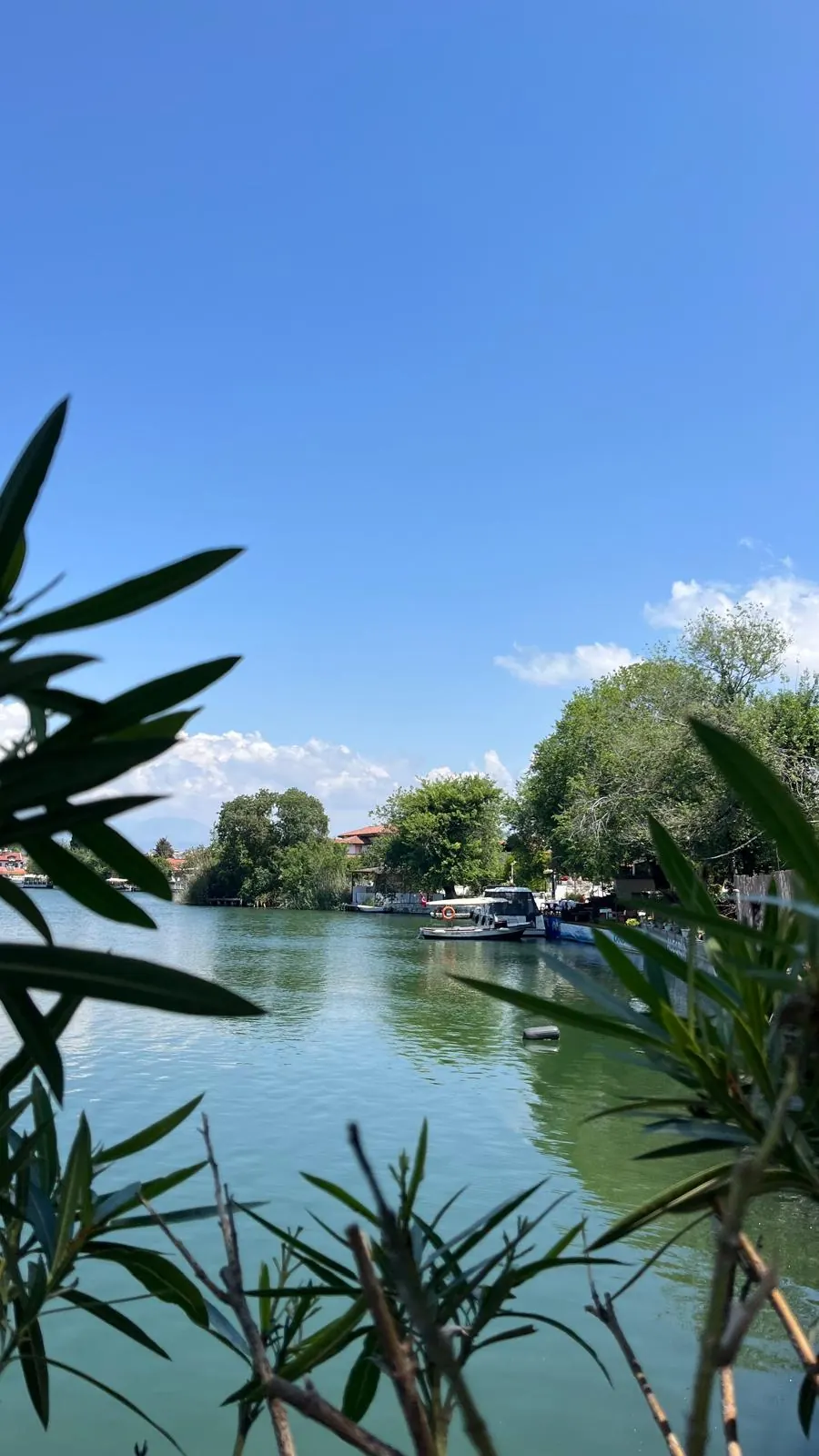
Most weather worries about Dalyan are aimed at the wrong trip. People look at a wind warning for the coast and cancel a day on the river, which barely notices it, then book an open-water day on a calm-looking morning that turns lively by two o'clock.
The useful question is not whether the weather is good. It is which part of your day happens on water that is sheltered, and which part happens on water that is not. Once you can answer that, most decisions make themselves.
Sheltered water and open water are two different forecasts
The Dalyan river runs between reed beds and low hills from the lake down to the sea. Reeds break the wind at water level, and the channel is narrow enough that waves have no distance to build. A breeze that makes the sea look white will usually leave the river rippled and nothing more.
Open water is the opposite. Trips that leave the river mouth, such as the run along the coast to Ekincik, or the bays around Gocek, sit exposed to whatever the wind is doing, and the swell can outlast the wind that caused it. A morning with no breeze can still carry a roll from yesterday.
Lake Koycegiz sits in between. It is large enough for a stiff afternoon wind to put a short chop on it, which is uncomfortable rather than dangerous, and it tends to settle again toward evening.
The afternoon breeze and why morning plans are safer
On most summer days the pattern is the same. The morning is still, the land heats up, and around midday a breeze starts to come in off the sea. It builds through the afternoon and usually fades around sunset.
For the river this hardly matters. For anything at sea it decides the shape of the day. Crews on open-water trips often do the exposed stretch early and tuck into a sheltered bay once the wind arrives, which is why the order of stops can change without anyone having got it wrong.
If you are choosing between two days for a sea trip, the day with the lighter afternoon forecast is the better one, even if the morning numbers look identical.
What happens when a trip is called off
River trips are rarely cancelled for wind. It takes weather well beyond an ordinary summer breeze to stop boats moving between the quay, the mud baths and Iztuzu. Sea trips are different, and the decision belongs to the crew on the morning, not to a forecast read the night before.
When a sea trip does not go, the usual outcomes are a move to another day or a swap to a sheltered route. Ask when you book which of those applies, and ask how you will be told. A WhatsApp message the evening before is far easier to act on than finding out on the quay.
- Ask whether a weather cancellation means a new date, a different route or your money back.
- Give a phone number that works on holiday, not only an email address.
- If you only have one free day for a sea trip, put it early in your week so there is room to move it.
Rain: rarer than people fear, wetter than people expect
From June to early September rain in Dalyan is unusual, and when it comes it is often a short, heavy shower rather than a grey day. Spring and autumn are less predictable, and a September or October thunderstorm can arrive quickly and clear just as fast.
Boats have a canopy over the deck, but the sides are open to the air, so rain blowing sideways will reach you. A light layer and a bag that closes properly do more good than an umbrella, which is awkward on deck anyway.
Rain changes less on the river than you would think. The tombs look better against a dark sky than a flat blue one, and the herons do not care. The part of the day that suffers is the beach, and a crew will often shorten a wet stop at Iztuzu and give the time back somewhere more sheltered.
July and August heat is the weather that catches people out
In high summer the risk is not wind or rain. It is heat. Afternoons in the high thirties are ordinary, and the air on the river can feel still once the boat stops moving. Shade on deck helps, but the stops are where people suffer: the walk up to Kaunos has no shade at the top, and the sand at Iztuzu reflects heat back at you.
Treat water the way you would on a long walk rather than a boat ride. Drinking water is usually provided, but bring your own bottle as well, and drink before you feel you need to.
- Wear a hat with a brim and a light long-sleeved top for the middle of the day.
- Put sun cream on before boarding, not at the first stop, and again after swimming.
- Skip the climb at Kaunos if anyone in your party is struggling, and see the tombs from the river instead.
- Stay near the river-mouth end at Iztuzu, where the water is shallow and warm and the kiosks are close.
Choosing the right trip for the forecast you have
If a windy spell is forecast, move your sea day and keep your river day. The full day on the river, the shuttle boat to Iztuzu and an evening on the water all work in conditions that would make an open-water trip unpleasant.
If a very hot spell is forecast, favour trips that spend more time moving than standing. A sunset trip avoids the worst of the afternoon completely, and a private boat lets you move the stops around the heat instead of following a fixed timetable.
If a showery day is forecast in spring or autumn, keep the booking and pack a layer. Short showers pass, and the river on a cool grey day is quieter than it will be all year.
Reading a forecast for Dalyan without overthinking it
Weather apps give a single number for a town, and Dalyan sits in a spot where that number can mislead. The town is a few kilometres inland, the river mouth is on the open coast, and the lake is a different body of water again. A calm reading for the town says little about the sea off Iztuzu.
Three things are worth checking, in this order. First, the wind strength for the afternoon rather than the morning, because that is when the sea breeze peaks. Second, the direction: wind coming straight in off the sea affects the river mouth and the coast more than wind from inland. Third, for sea trips only, any wave or swell figure, which tells you whether yesterday's wind has left a roll behind.
You do not need to become a sailor about it. If the afternoon wind looks noticeably stronger than on the days around it, that is the day to keep for the river and not the sea. If it looks like every other day, go. And if the forecast and the crew disagree on the morning, believe the crew, who can see the water.
Who should take the weather more seriously
Some people are more affected than others, and it is worth being honest about it when you book. Anyone prone to seasickness should not put their only boat day on open water after a windy spell. Small children and older travellers feel heat long before they complain about it. And anyone on medication that makes them sensitive to sun should plan shade before the day, not during it.
None of this needs to cancel a holiday plan. It usually just means swapping which trip goes on which day.
Frequently asked questions
Do Dalyan river boats run when it is windy?
Usually, yes. The river is sheltered by reeds and hills, so an ordinary summer breeze makes little difference to it. Trips that go out to sea are the ones affected by wind.
What happens to my sea trip if the weather turns?
The crew decides on the morning. The usual outcomes are a new date or a more sheltered route. Ask which applies before you book, and how you will be told.
Is it worth going if rain is forecast?
In most cases, yes. Summer showers tend to be short, and the river stretch is pleasant in cloud. The beach stop is the part most likely to be shortened.
When is the heat worst on a boat day?
From late morning to mid-afternoon in July and August, and mostly at the stops rather than on the moving boat. The climb at Kaunos and the sand at Iztuzu are the hottest parts.
Can I change my trip because of the forecast?
That depends on who you book with, so ask at the time of booking rather than on the day. Giving a working phone number makes a change far easier to arrange.
You may also want to read
Dalyan Day Boat Trip
The whole river in one day: tombs, sulphur pools and the long stop at Turtle Beach.
Trip detailsEkincik Bay and the Blue Cave
Out of the river and along the cliffs: the one Dalyan boat day that is properly at sea.
Trip detailsDalyan Sunset Cruise
Two hours on flat water while the light goes, and the tombs lit from below on the way home.
Trip detailsWhen to Go
The months nobody argues about, and the ones worth arguing about.
Read moreIztuzu Beach
Four and a half kilometres of sand between a river and the sea, with rules that are enforced.
Read more