Caretta Caretta in Dalyan: Where the River Beats the Beach
Where and when loggerheads actually surface in Dalyan, and what the İztuzu rules are for.
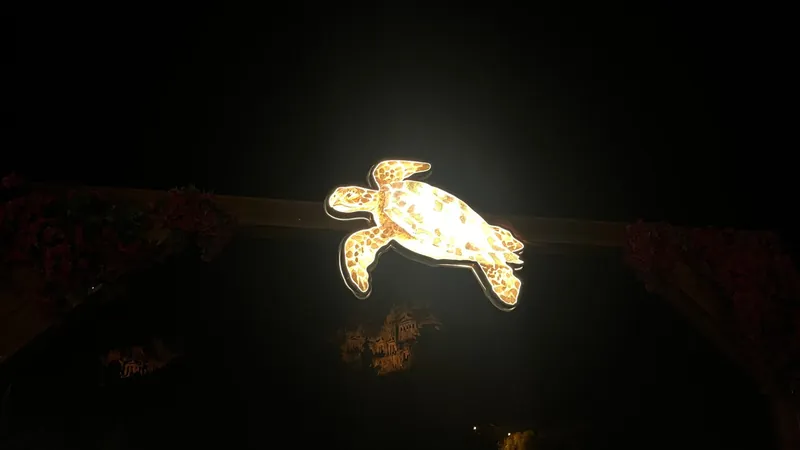
We get asked the same question most mornings on the quay: which boat sees the most turtles? The honest answer is that it has less to do with the boat and more to do with the stretch of river you are on and the hour you happen to be on it.
Caretta caretta is a wild animal going about its own business in a working river, not an exhibit that keeps a schedule. What follows is a plain account of where the odds sit in your favour, where they do not, and what the İztuzu rules are actually there to protect. Nobody who tells you a sighting is guaranteed is telling you the truth.
The river channel, not the open sea
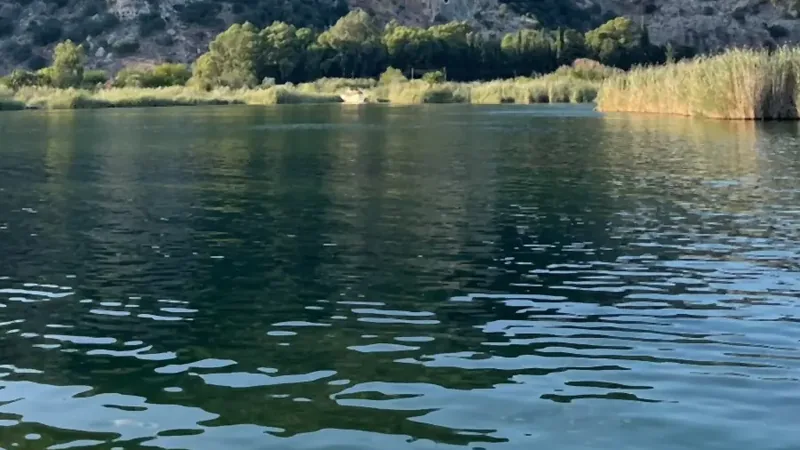
Most first-time visitors picture a turtle sighting happening on the beach, out in the surf. In practice the river channel between the town quay and the sandbar is where boats report the most surfacings, particularly the wider, calmer stretches where the current slows and the reeds crowd the banks.
We think this surprises people because the beach gets all the marketing and the river gets treated as a way of reaching it. The river is quieter, the water is flatter, and a loggerhead's head breaking the surface for a breath is genuinely easier to spot against calm green water than against a rolling sea swell.
It also means you do not need to book a dedicated turtle-watching excursion. Any boat working the river between the town and Iztuzu is travelling through the same water, at a pace slow enough that a sighting is possible without anyone trying particularly hard.
The stretch just below the reed channels, where the river widens out before the last bend toward the sandbar, is one that regular boat drivers mention more often than most. There is nothing marked or official about it; it is simply a wide, sheltered piece of water that a lot of boats pass through slowly.
Reading the water instead of scanning the horizon
A loggerhead does not announce itself. It comes up for a breath, shows a rounded, weathered head for a second or two, and goes back under. Boat crews who spot them are usually watching for a small ripple pattern spreading from an otherwise still point on the surface, rather than for a shape or a splash.
If you are on a shared boat, sit toward the side rather than crowding the bow. You get a wider sweep of water that way, and you are not competing with a dozen other passengers all staring at the same forty degrees of river.
Polarised sunglasses help more than people expect. Glare sits on the surface of the water and hides exactly the kind of small disturbance a surfacing turtle makes, so cutting that glare buys you a genuinely better chance of noticing one.
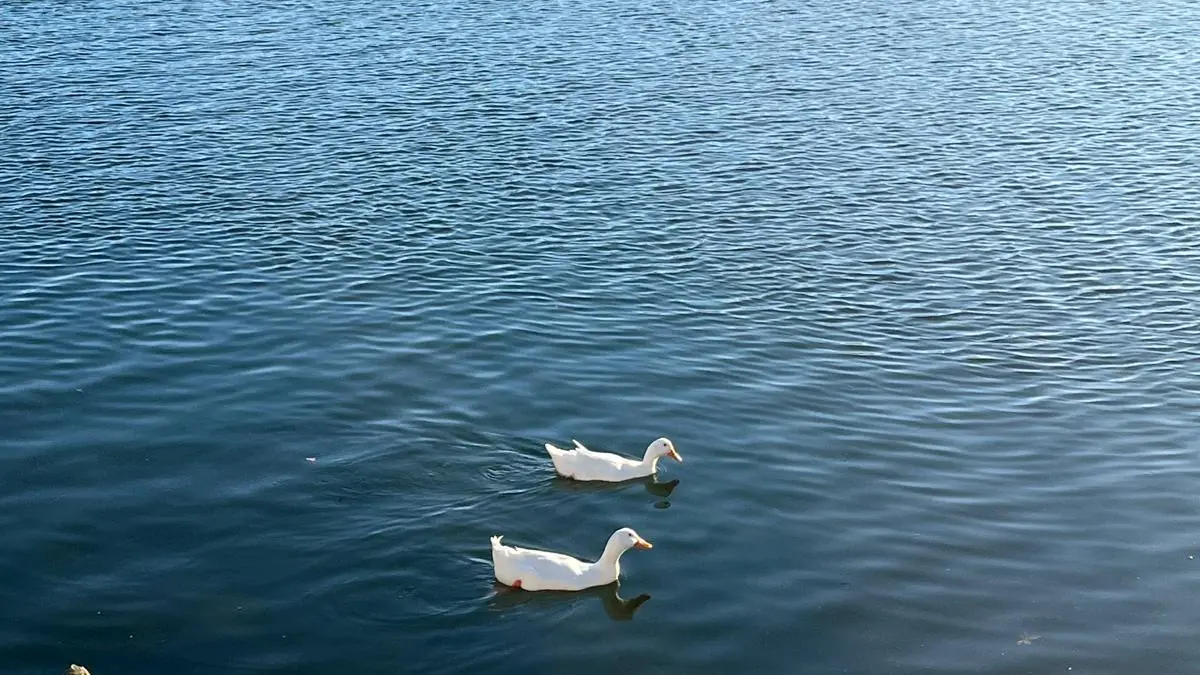
Two windows work better than the rest of the day
- Early morning, before the river fills with boat traffic and the water is at its calmest
- Late afternoon into early evening, when the light is low and glare off the water drops away
- The flat middle of the day is the weakest window of the three, with more engine noise, more boats and more glare working against you
- Weekdays outside the main summer weeks tend to have quieter water than weekend afternoons in August
Our honest view on the shuttle-boat turtle stop
This is where we part company with some of the tour patter you will hear on the quay: the brief mid-river stop that some shuttle boats make specifically to look for turtles is, in our view, oversold. A slow boat gliding steadily through the channel on its way to or from the beach gives you a genuinely better chance than a boat parked in one spot for five minutes and expecting an animal to surface on cue.
We are not saying skip the stop if your boat makes one, since it costs you nothing and occasionally pays off. We are saying do not choose a trip on the promise of it, and do not feel short-changed if it produces nothing. That is simply how wildlife works, on a river or anywhere else.
If a driver cuts the engine and waits in total silence for a minute or two, that is a good sign of a crew that understands the animal. If a driver revs the engine to try to startle one to the surface, that tells you something less flattering about the operator.
What the İztuzu rules actually protect
| Rule | What it is for |
|---|---|
| Beach closed 20:00 to 08:00 in nesting season | Nesting and hatching happen after dark and need to go undisturbed by foot traffic |
| No entry to marked nests | A disturbed nest can fail entirely, with no eggs surviving to hatch |
| No parasols or sunbeds on the sand | Keeps the beach clear for nesting females and for the nests already dug into it |
| No speedboats within one kilometre of the beach | Reduces propeller strikes and underwater noise near a known feeding and nesting area |
| No lights or flash photography at night | Light disorients nesting females and hatchlings, which both navigate by the horizon |
These are not suggestions. They are the reason Iztuzu still has turtles nesting on it after decades of tourism, and every one of them is enforced.
Why boats do not feed or chase them
A boat that idles alongside a surfaced turtle, cuts its engine and lets the animal move off in its own time is doing the right thing. A boat that guns the engine to close the distance, or that has a crew member tossing scraps to draw one to the surface, is not, and we would steer you away from any operator you see doing either.
Nobody can promise you a sighting, and any operator who does is telling you what you want to hear rather than what is true. What a good crew can promise, and should, is that they will not chase, feed or corner the animal simply to manufacture a moment for a boatload of passengers.
Feeding in particular changes behaviour in ways that outlast the season. A turtle that learns boats mean food starts approaching engines and propellers, which is exactly the outcome the whole set of rules exists to prevent. It also teaches the animal to associate people with something it should be indifferent to at best.
None of this means the boats treat the river as a museum. Fishing continues, the shuttle service runs all day and the water stays genuinely busy through the summer. What has changed over the years is a shared, largely unwritten understanding among local crews about what is worth doing for a photograph and what is not.
What to do if you do see one
Stay seated, keep your voice down and let the boat drift rather than motor toward it. A sudden movement or a burst of noise is usually what sends a surfaced turtle back under before anyone gets a proper look.
If you are swimming near Iztuzu and see one in the shallows, the same logic applies on a smaller scale: keep your distance, do not chase it into deeper water, and resist the urge to touch it even if it looks entirely unbothered by your presence.
Cameras are fine in daylight, though a long lens or a decent zoom does more for you than getting physically closer ever will. A phone held at arm's length rarely captures anything more than a dot on the water, and the attempt usually costs you the moment itself.
Beyond the sightings: what the season means for the town
Nesting season shapes more of Dalyan's summer than most visitors realise. Restaurants along the riverfront, boat crews and the beach kiosks all work around it, not because a rule tells them to but because the turtles were here long before the tourism was, and the whole local economy has grown up accepting that.
We would rather visitors understood this than simply obeyed the signage. The beach closing at eight in the evening is not a curfew imposed on holidaymakers; it is the one part of the day set aside for the animal the entire town is named for, in a manner of speaking.
If you have children with you, the rules are also a reasonably good, low-drama way of explaining why some places get left alone even when nothing visibly stops you walking onto them. A marked nest with a small wooden cage over it is a more effective lesson than any lecture.
Frequently asked questions
Am I guaranteed to see a turtle in Dalyan?
No. It is a wild river and nobody can promise a sighting on a given day, whatever a boat operator tells you.
Is the river or the beach the better place to look?
The river channel generally produces more sightings than the open beach, especially in the calmer stretches away from heavy boat traffic.
What time of day gives the best chance?
Early morning and the couple of hours before dusk tend to be quieter on the water, which helps.
Can I visit Iztuzu Beach at night to see nesting?
No. The beach closes from 20:00 to 08:00 through the nesting season and this is enforced, not optional.
Is it safe to swim near a turtle if one surfaces close to the boat?
Keep your distance and let it move away on its own; do not swim toward it or try to touch it.
Do all boat trips include a stop to look for turtles?
Many do, but treat it as a bonus rather than a reason to book, for the reasons above.
You may also want to read
Dalyan Day Boat Trip
The whole river in one day: tombs, sulphur pools and the long stop at Turtle Beach.
Trip details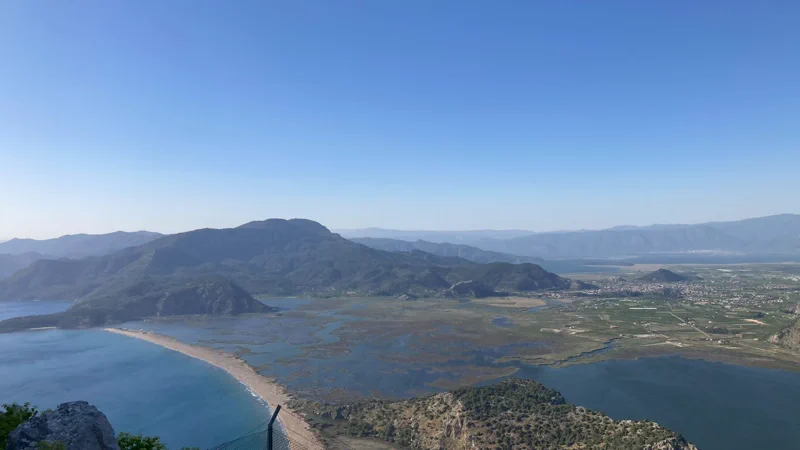
Iztuzu Beach
Four and a half kilometres of sand between a river and the sea, with rules that are enforced.
Read moreIztuzu Beach Shuttle Boat
The plain way down the river: no stops, no lunch, and the whole day on the sand.
Trip details
When to Go
The months nobody argues about, and the ones worth arguing about.
Read more
Koycegiz Lake
Where the river comes from, and the part of the water most day trips only glance at.
Read more