Blue Crab in Dalyan: How to Eat It Around a Boat Day
The one thing on the menu that comes out of the water you spent the day on.
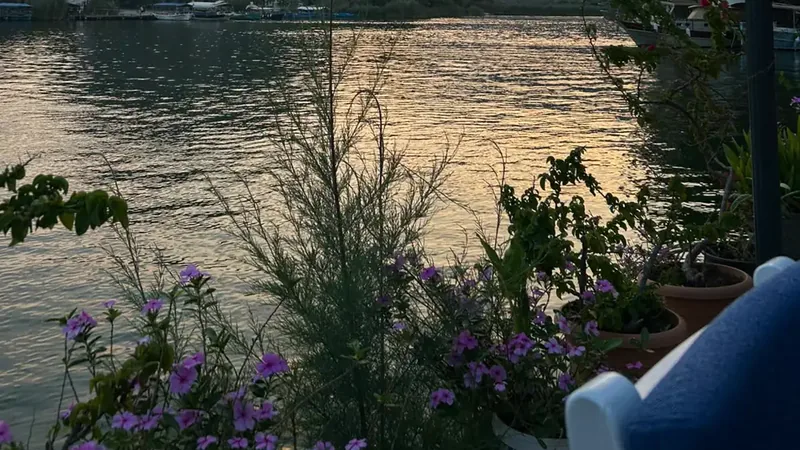
The boats pass over them all day and nobody notices. Blue crab sits in the channel mud under the reeds, works the shallow edges of the delta, and comes out of the water a few hundred metres from the tables where it is eaten. It is the one thing on a menu here that belongs specifically to the water you have just spent the day on.
What follows is not a recipe and not a restaurant list. It is how to fit the animal into a week that already has boats in it: which day to leave it alone, what has to be arranged before you sail, and who we would gently steer towards the sea bass instead.
What the fishery looks like from the deck
You will not see a crab from a moving boat. You will see the apparatus, if you know what you are looking at, and most people go past the lot of it thinking about the tombs.
- Small floats in the quieter channels, often no more than a plastic bottle, marking pots dropped at dusk and lifted at first light.
- Flat skiffs with an outboard on the back, tucked into gaps in the reeds where a tour boat could not turn round.
- The weir below the town. Dalyan is named after it, it has been catching fish across this channel for a very long time, and the crab arrived and started helping itself to what was in it.
- Crates at the fish counters in the morning with the claws still moving, which is the only stage most visitors witness.
- Nothing whatsoever, on plenty of days. None of this runs to a schedule laid on for passing boats.
Which channels are being worked shifts through the season. The skipper on your boat will know, and will generally be pleased to be asked something other than what time lunch is.
Why this particular water suits them
The system runs from a lake down to the open sea in a handful of kilometres. Fresh water at the top, salt at the bottom, and a long brackish middle threaded through the reed channels. Very few animals are comfortable across that whole range. This one is, and that is why the delta holds so many of them.
It is not a native species and nobody here pretends otherwise. It crossed from the Atlantic side and has been in this sea for generations, and for a long stretch of that it was simply a nuisance: it cuts nets, and it eats fish that are already caught and cannot swim away from it.
A market turned up eventually and the boats began landing it on purpose rather than swearing at it. The practical upshot for a visitor is that what reaches the table is plentiful, caught close by, and did not spend two days in the back of a lorry.
Where it fits in a week with boats in it
| The day you have booked | Where the crab fits | What to settle in advance |
|---|---|---|
| Full day on the river | Not at the lunch stop. Lunch is cooked on board, the deck is wet and salty, and there are never enough napkins | Nothing. Keep the crab for the evening |
| Private boat | On board, if the boat has a galley and the skipper has been asked properly | Say it when you book, not on the morning |
| Beach shuttle | Back in town afterwards. Nothing is cooked at the sand end and nothing should be | No fires or barbecues at Iztuzu, so do not plan one |
| Sunset run | Straight off the boat and onto a table by the water, which is the best version of this evening | Book the table rather than the crab |
| A villa week | Bought at the counter in the morning and cooked at home | A large pot, and somebody willing to do the work |
Whether a given boat can cook anything at all is a question about that boat rather than about the trip. Ask us before you book and we will tell you which boats have a galley that day.
The words that matter when you order
Menus on the riverfront are printed in several languages and the translations are approximate, so the Turkish underneath them is worth a glance.
- yengec is crab in general. On its own it tells you nothing about which one, so ask.
- mavi yengec is the blue crab, the one this page is about.
- izgara is grilled, haslama is boiled, guvec is a casserole and corba is soup.
- sarimsakli is with garlic and tereyagli is with butter, which between them account for most of what gets done to a crab here.
- It is sold by weight, which is normal and not a trick. Ask whether you are being quoted by the kilo or by the portion, and ask for it to be weighed in front of you.
Our view on when to eat it
We think it is an evening animal and a poor lunch. Eating one properly takes both hands and the better part of half an hour, and that half hour belongs at a table you have no intention of leaving, not at a stop with a boat idling beside it.
It is also the wrong dinner for the night before an early departure. A long shellfish evening and a half past eight quay do not sit well together, and we have watched enough people work that out on the morning.
And since the point of these pages is an opinion rather than a brochure: to us the crab is slightly oversold as the taste of Dalyan. It is very good. So is the mullet out of the same channel, and the pressed roe is more interesting than either. Order the crab, but do not order it instead of everything else.
Buying one and cooking it yourself
If you are in a villa with a kitchen, this is much the best way to find out what the animal is actually like. Buy in the morning, cook it the same day, and give it more pot and more salted water than looks necessary.
The practical points nobody mentions: a crowded pan boils badly, so the pot has to be genuinely large; the smell settles into the kitchen for a while; and what is left on the table at the end is a startling volume of shell for the amount of meat that came out of it. Worth knowing before you invite eight people.
Two things not to do. Do not plan to cook on the sand at Iztuzu, where fires and barbecues are not allowed and the wardens mean it. And do not tip leftovers over the side of a boat. Turtles and everything else in the river learn very quickly to follow boats that feed them, and boats have propellers.
Who we would talk out of it
Large tables. A crab arrives when the kitchen is ready rather than when the group is, and ten people waiting to eat with their hands at the same moment is not what this dish does well. Two or three in the middle of the table for everyone to pick at works far better.
Small children, usually. There is shell, there is a pick, and there is a good deal of patience required for a modest reward. The meze tray keeps them considerably happier and costs the evening nothing.
Anyone with a shellfish allergy, without qualification. It is not the same thing as a fish allergy, it can be severe, and a small kitchen works with one grill and one set of pans. Say so before anything at all is ordered. On a boat it matters more than it does in town, because the river mouth is not a place help reaches quickly.
And anyone who wants a full plate of dinner. The yield off a whole crab is modest and the evening is long, which is the pleasure of it for some people and the frustration of it for everybody else.
What changes the cost, and where the figures live
There are no numbers on this site, and that is deliberate. What is useful is knowing what moves them.
For the crab itself: the weight, the month, and whether the kitchen is on the waterfront with the tombs in view or a street back where the rent is lower. For crab arranged around a boat: whether the boat is yours or shared, whether it has a galley or a cool box, and whether the crew are cooking or a restaurant down the channel is doing it for them.
We do not print prices on these pages, because a number written in one month is wrong by the next. Send the date and the number of people and you get the figure for that day, along with what the boat can cook.
Frequently asked questions
Is the blue crab actually from Dalyan?
It lives here in numbers and is caught here, but it is not a native animal. It crossed from the Atlantic a long time ago and settled into the brackish channels, which suit it better than almost anywhere. Local in the sense that matters at a table; not indigenous.
Can we eat it on the boat?
Only if the boat can cook and somebody arranged it before you sailed. Shared day boats cook a set lunch and will not take a special order on the morning. A private boat with a galley is the realistic version, and it needs saying at the booking stage.
Will we see one from the boat?
Sometimes, in the shallows or coming up on a fisherman's line. It is a wild animal in muddy water, so you may and you may not, and anybody promising you a sighting is selling rather than telling.
Is there a month to aim for?
The warm half of the year, and the back end of it rather than the front. Through the cold months the crabs go quiet and a fair number of riverside kitchens are shut, so the question mostly answers itself.
What should we wear to eat one?
Something garlic butter can land on. It travels further than seems physically possible and it does not come out of pale linen.
You may also want to read
Where to Eat
A fishing weir gave the town its name, and it still decides a good deal of the menu.
Read more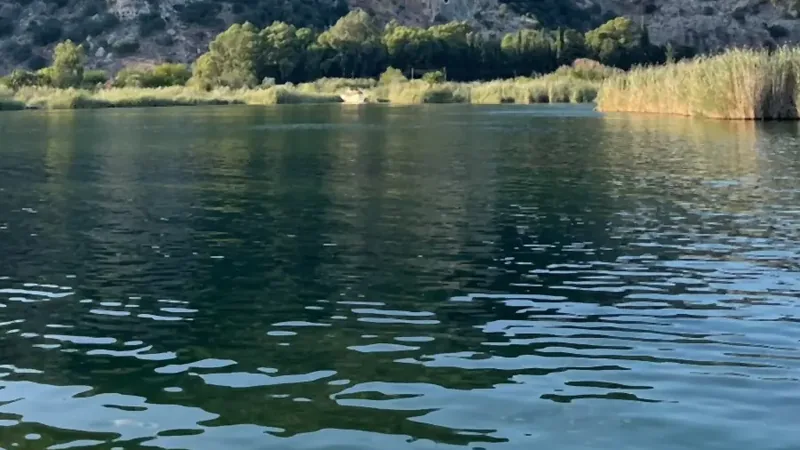
Dalyan Day Boat Trip
The whole river in one day: tombs, sulphur pools and the long stop at Turtle Beach.
Trip details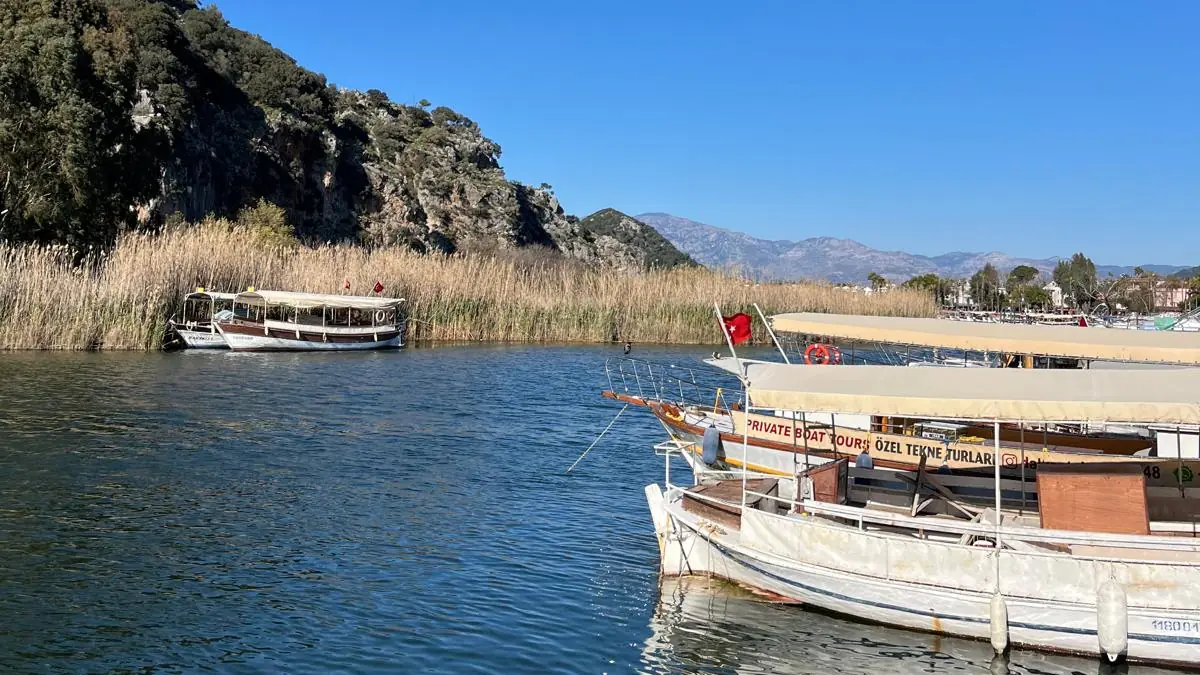
Private Boat Charter From Dalyan
The same river with the timetable removed. You set the stops and the hour you turn back.
Trip details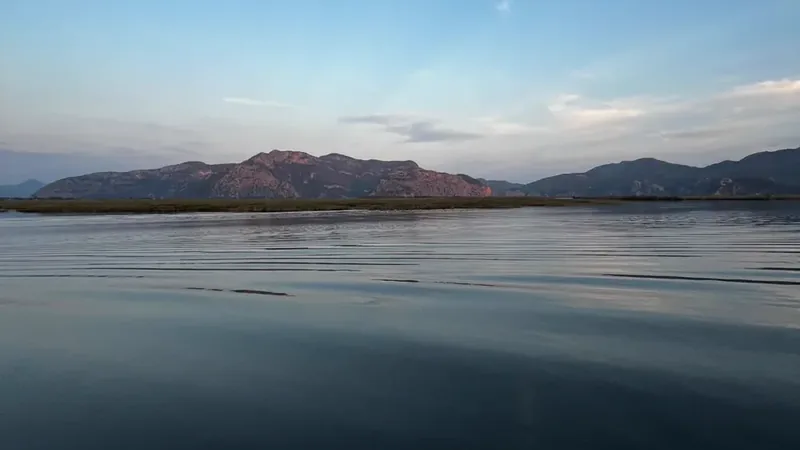
Koycegiz Lake
Where the river comes from, and the part of the water most day trips only glance at.
Read moreWhat Sets the Price
Why two boats leaving the same quay on the same morning are not the same money.
Read more