Beyond the Turtles: Birds and River Life in the Dalyan Delta
Everyone looks for the loggerheads. Here is the rest of the river, and how to see more of it from the deck.
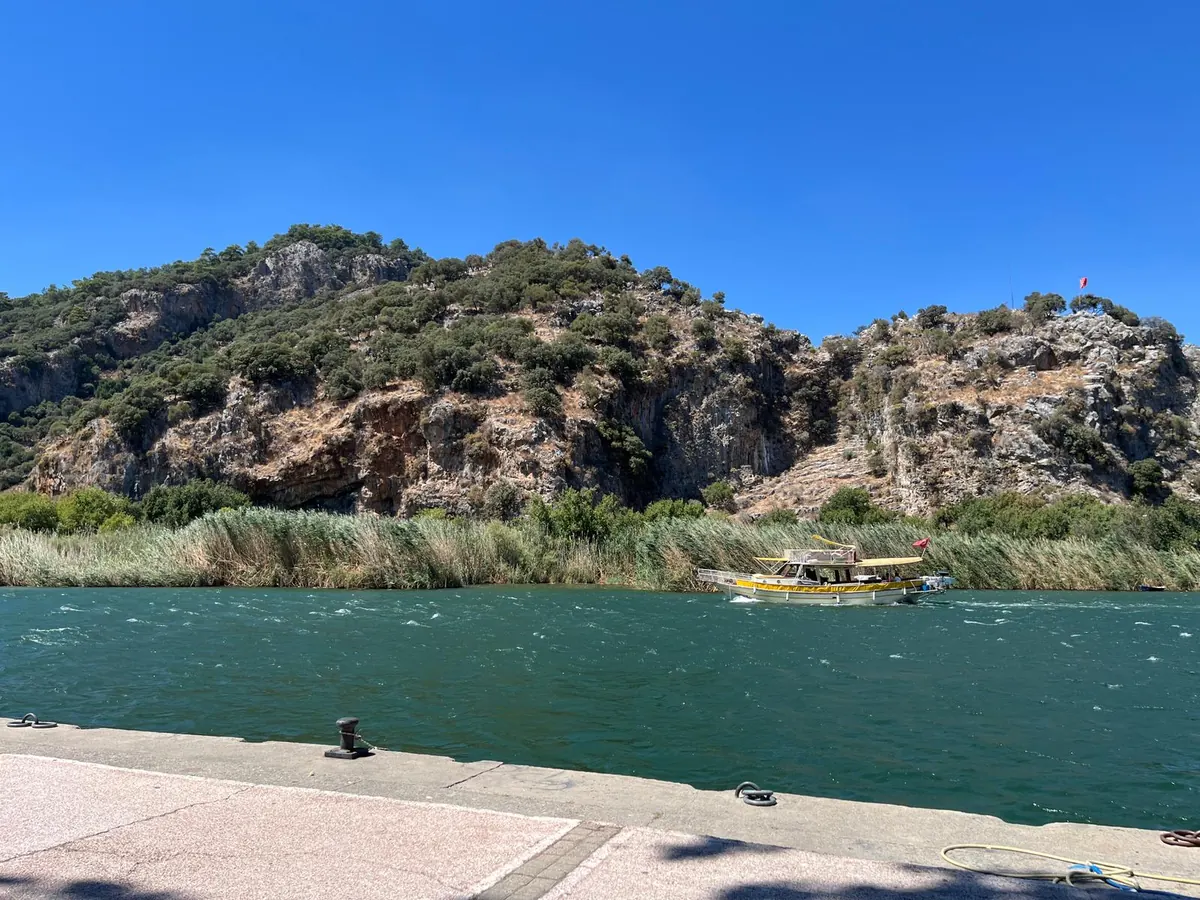
Most people board a Dalyan boat hoping for one animal, the loggerhead turtle, and spend the day scanning the water for a brown head. Meanwhile the river is full of other life that goes almost completely unnoticed: birds standing still in the reeds a few metres away, fish moving under the boat, and a second, far rarer turtle that most visitors have never heard of.
None of what follows can be promised. Wild animals keep their own hours. But knowing what lives here, and where to look, turns a scenic ride into something closer to a slow safari, and it makes the quiet stretches between stops the best part of the day.
Why the delta is so alive
The Dalyan river connects Lake Koycegiz to the Mediterranean. Fresh water from the lake meets salt water pushing in from the sea, and the mix of the two, spread through a maze of shallow channels and reed beds, makes one of the richest wetland habitats on this coast.
The whole area, from the lake down to Iztuzu Beach, has been a specially protected area since 1988. That protection is the reason there are no hotels on the beach and no road along it, and it is also why the reed beds are still thick and the channels still full of fish. Everything else on this page depends on that.
For a visitor, the practical result is simple. Every reed bed you pass is a feeding ground, and the slower and quieter the boat, the more of it you see.
The herons and egrets
The birds you are most likely to see are the herons. The grey heron is the big one: tall, grey, motionless at the edge of the reeds, and so still that people look straight past it. When it flies, it folds its neck back and rows slowly away on wide wings.
Smaller and brilliant white, the little egret works the shallow edges, often walking and stabbing at the water rather than waiting. At a distance it can look like a plastic bag caught in the reeds until it moves.
The best time for both is early or late in the day, when they are most active and the light makes them easier to pick out. On an evening trip it is common to see several along a single stretch of channel.
The flash of blue: kingfishers
Kingfishers are the birds people remember, precisely because they are so hard to see. You will usually notice a streak of electric blue low over the water and then nothing. Look for them perched on a reed stem or a branch just above the surface, very still, head pointed down.
Crews who spend every day on the river often know the stretches where kingfishers hunt. If you are keen, ask. On a private or quiet boat, the crew can slow down at the right spot and give you a minute to look properly.
Cormorants, gulls and the river mouth
Closer to the sea the cast changes. Cormorants sit on posts and rocks with their wings held open to dry, looking faintly prehistoric. Gulls gather where the river meets the sea at Iztuzu, and terns may be diving offshore in the right season.
The river mouth is a good place to simply stand and watch. The meeting of fresh and salt water concentrates fish, and where there are fish there are birds working them.
The other turtle: the Nile softshell
Here is the animal that surprises even people who have visited Dalyan before. Alongside the loggerheads, the Koycegiz and Dalyan wetlands are home to the Nile softshell turtle, a large freshwater turtle with a flat, leathery shell and a long, pointed snout. In Turkey it survives in only a handful of river systems, and Dalyan is one of the places it holds on.
It is shy and spends most of its time in the water, so sightings are brief: a flat shape just below the surface, a snout breaking the water to breathe, then gone. If you see one, you have seen something genuinely rare, and it is protected for good reason.
It is also vulnerable to exactly what happens on a busy river: boat traffic, disturbance of nesting sand and litter. Everything in the section on behaving well applies to it as much as to the loggerheads.
The fish, the crabs and the name of the town
The word dalyan means a fish weir in Turkish, a fence of stakes and traps built across a channel to catch fish moving between the lake and the sea. The town takes its name from it. Grey mullet and sea bass are among the fish that make that journey, and on clear stretches you can sometimes see shoals turning in the water beside the boat.
The blue crab is the newer arrival. It is not native, but it has become abundant in the channels, and it now turns up on local menus. You are unlikely to see one alive from the deck, but you will pass the gear used to catch them.
If you pass a weir, look at how it is built. The line of stakes and the funnel-shaped traps are designed to let water through while steering fish into a chamber they cannot easily leave. It is an old way of fishing, suited to a place where huge numbers of fish move through one narrow gap at certain times of year, and it explains why this particular stretch of river supported a settlement long before anyone came for the tombs or the beach. A crew member will usually be happy to explain how it works if you ask as you go by.
Small things worth noticing
Once you start looking, the reeds are busy. Dragonflies patrol the edges in summer, some a startling red. Small birds move through the reeds and can be heard far more often than seen. Frogs call from the channels toward evening. Around Lake Koycegiz, stands of oriental sweetgum trees grow at the water's edge, one of the rarer tree habitats in the region.
None of these is a headline animal. Together they are what makes the river feel alive rather than simply pretty.
How to see more from the boat
- Choose an early or late trip. Wildlife is most active, and the light is kinder, at the start and end of the day.
- Sit at the side of the boat rather than in the middle, and keep watching the edge of the reeds, not the open water.
- Bring binoculars if you have them. Even a small pair changes what you can see.
- Keep voices down on quiet stretches. Birds that ignore a boat will still flush at shouting.
- Ask the crew. They see the river every day and know where the birds usually are.
- Think about a private boat if wildlife matters to you. You can go slowly and stop where you like.
Watching without disturbing
The reason these animals are still here is that the delta has been protected, and every visitor is part of keeping it that way. Do not ask a crew to chase birds or approach a turtle closely for a photo. Do not throw food into the water, and take every piece of litter home. At the beach, keep away from marked turtle nests, and remember that Iztuzu closes at night during nesting season for exactly this reason.
A good wildlife sighting on the Dalyan river is one where the animal carries on as if you were not there.
Frequently asked questions
What birds can you see on a Dalyan boat trip?
Grey herons and little egrets are the most common, along with cormorants and gulls nearer the sea. Kingfishers are present but brief. Sightings vary by day and season and nobody can promise them.
Are there other turtles in Dalyan besides loggerheads?
Yes. The Nile softshell turtle lives in the Koycegiz and Dalyan wetlands. It is rare in Turkey, shy, and usually seen only briefly at the surface.
What does the name Dalyan mean?
It means a fish weir, a barrier of stakes and traps built across a channel to catch fish moving between the lake and the sea.
When is the best time to see wildlife on the river?
Early morning and late afternoon into evening, when birds are most active. Quieter boats and slower stretches also help.
Should I bring binoculars?
If you have a pair, yes. Many of the birds stand at the edge of the reeds, and binoculars make the difference between a grey shape and a heron.
You may also want to read
Dalyan Sunset Cruise
Two hours on flat water while the light goes, and the tombs lit from below on the way home.
Trip detailsDalyan Day Boat Trip
The whole river in one day: tombs, sulphur pools and the long stop at Turtle Beach.
Trip detailsPrivate Boat Charter From Dalyan
The same river with the timetable removed. You set the stops and the hour you turn back.
Trip detailsLoggerhead Turtles at Dalyan
A protected nesting beach, a river full of hopeful turtles, and no guarantees from anyone.
Read moreKoycegiz Lake
Where the river comes from, and the part of the water most day trips only glance at.
Read more