A Boat Day Inside a Protected Area: How to Visit Dalyan Well
The river, the lake and Turtle Beach are protected ground. What that asks of a visitor, and why it is worth doing.
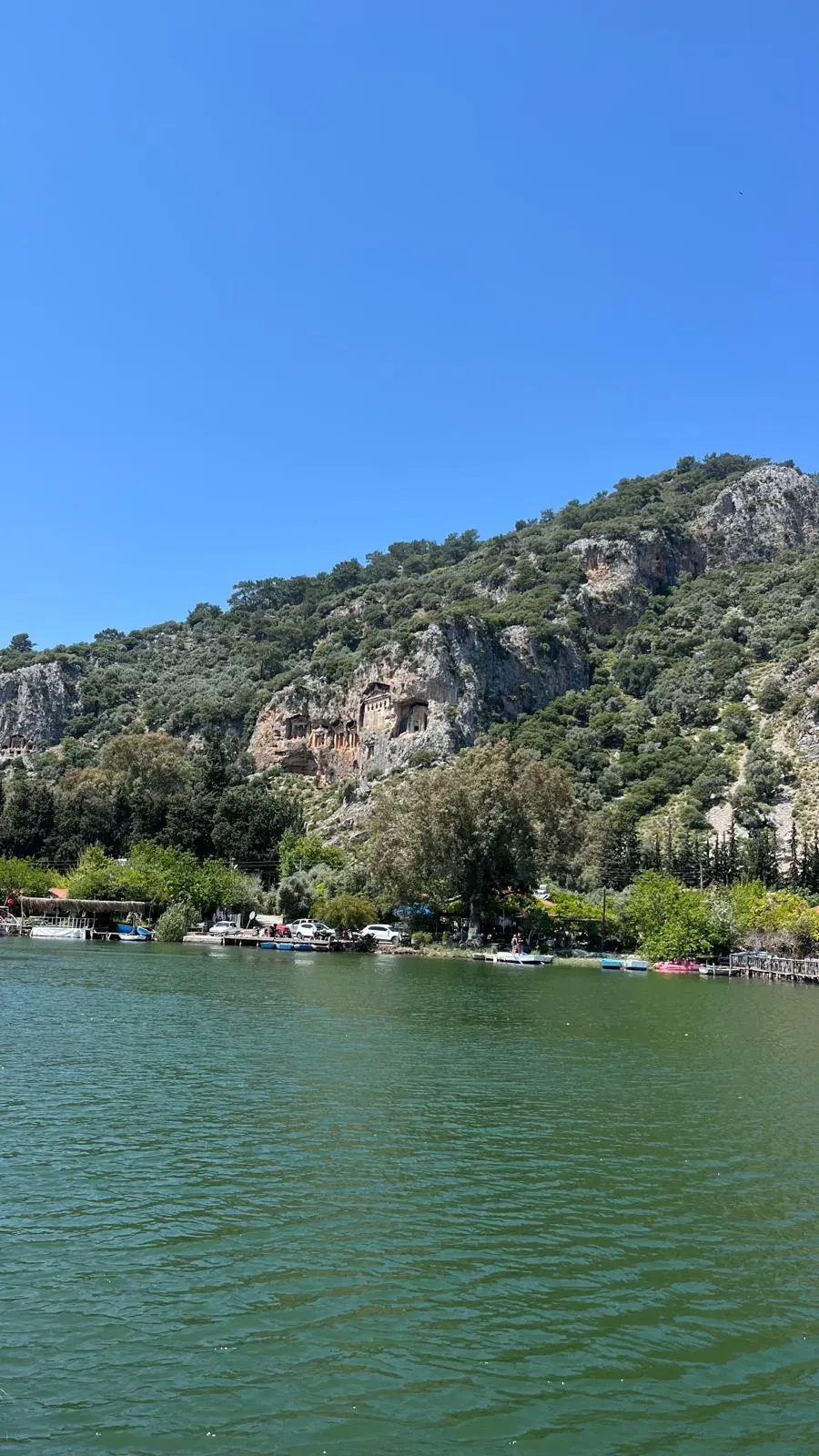
Almost everything visitors love about Dalyan exists because of a decision made decades ago. The river, the lake, the reed beds and Iztuzu Beach were placed inside a specially protected area in 1988, after a campaign to stop a hotel development on the turtle beach. That is why there is no resort on the sand, no road running along it and no high-rise on the riverbank.
Protection is not only a line on a map. It depends on the thousands of people who pass through every summer behaving in a way that lets the place keep working for its wildlife. Most of what that asks is simple, and most visitors are glad to do it once they know the reasons.
What the protected area covers
The protected area stretches from Lake Koycegiz down the Dalyan river and its delta to Iztuzu Beach and the coast. It includes the reed beds and channels you travel through on a boat trip, the nesting beach used by loggerhead turtles, and wetland habitat for birds, fish and the rare Nile softshell turtle.
For a visitor, that means the whole of a typical river day, from the town quay to the sand at the river mouth, happens inside it. The rules below are not about one sign on one beach. They are how the whole place is meant to be used.
Iztuzu Beach at night
During the nesting season, Iztuzu Beach is closed to visitors from eight in the evening until eight in the morning. This is when female loggerheads come ashore to dig nests and, later in the summer, when hatchlings emerge and head for the sea.
Lights, noise and people on the sand at night can stop a turtle from nesting and can send hatchlings the wrong way, inland toward light instead of out to the sea. That is why the closure exists, and why lights and camera flashes on the beach at night are not allowed. The rule is not a formality, and it is not negotiable.
The nests during the day
In the daytime the beach is open, but the nests are still there under the sand. Many are marked with a small protective cage or stakes. Do not step inside a marked area, do not move or lean on the markers, and do not dig around them.
Umbrellas and sunbeds belong only in the places where they are provided or permitted, never pushed into the sand in the nesting zone. A pole driven into the sand can go straight through a clutch of eggs you cannot see.
Keep children from digging deep holes and building big sandcastles further up the beach, and fill any holes in before you leave. A hatchling that falls into a hole may not get out.
Turtles in the river
Loggerheads are sometimes seen in the river itself, and a turtle near the boat is a thrilling moment. The kind thing to do is let it be. Do not ask the crew to chase it or to bring the boat close, and do not throw food into the water to attract it.
Feeding changes how wild animals behave. Turtles that learn to approach boats for food spend time in busy water where propellers are a real danger. If you see a turtle, enjoy it from where you are, keep your voice down and let it go on its way.
Speed, noise and the reed beds
Powered speedboats are not allowed within a kilometre of Iztuzu, because of the nesting beach. On the river, boats keep their speed down, which protects the banks from wash and keeps the water safer for animals.
Music is part of some boat days, but on quiet stretches, and particularly on evening trips, a lower volume makes a difference to the birds in the reeds and to the people on the boat who came for the silence.
Stay on the boat or on the landing stages rather than pushing into the reed beds. The reeds are nesting and feeding habitat, and they are easily damaged.
Litter, cigarettes and sun cream
Take everything you bring back with you: bottles, wrappers, wet wipes and especially plastic bags, which drift into the reeds and are mistaken for food by turtles. Most boats have a bin on board. Use it rather than the river.
Cigarette ends are the most common litter on beaches everywhere, including Iztuzu. If you smoke, carry something to put them in.
Sun cream washes off in the water. There is no need to go without it on a summer day, but applying it well before swimming, rather than seconds before jumping in, means more of it stays on your skin.
Kaunos and the rock tombs
The protected landscape includes a protected history. The rock tombs and the ancient city of Kaunos are archaeological sites. Do not climb on the carved facades, do not scratch or write on stone, and do not take pieces of pottery or stone as souvenirs, however small. What looks like a loose fragment is part of the site.
The rescue centre at the river mouth
At the river-mouth end of Iztuzu there is a sea turtle research and rescue centre, known by its Turkish initials as DEKAMER. Injured turtles from the coast are brought here for treatment, many of them hurt by boat propellers, fishing hooks or discarded line, and released again when they recover.
If your boat day includes time at that end of the beach, it is worth a visit. Seeing a turtle with a damaged shell in a recovery tank explains the rules on this page more clearly than any sign. It also makes the connection between a careless moment on the water, a bit of fishing line in the sea or a boat going too fast, and an animal that ends up needing help.
Treat it as what it is, a working rescue facility rather than an attraction, and follow whatever the staff ask of visitors on the day.
Small habits that help
- Choose operators who keep to the speed and distance rules rather than those promising a close-up with a turtle.
- Carry a reusable water bottle.
- Keep dogs, if you travel with one, away from the nesting beach.
- Stay out of marked areas even when nobody is watching.
- If you see a stranded turtle or someone disturbing a nest, tell the crew or the beach staff rather than intervening yourself.
Why it is worth the effort
It would be easy to see all this as a list of things you cannot do. It is closer to the opposite. The reason Dalyan still has a wild beach, thick reed beds and turtles in the river, when so much of the Mediterranean coast has lost them, is that people agreed to use this place carefully.
A visitor who keeps to the rules is not missing out on anything. They are part of the reason the place will still be worth visiting in twenty years.
Frequently asked questions
Is Dalyan a protected area?
Yes. The Koycegiz and Dalyan area, including the river, the lake and Iztuzu Beach, has been a specially protected area since 1988.
When is Iztuzu Beach closed?
During the nesting season it is closed from 20:00 to 08:00, to protect nesting turtles and hatchlings.
Can I use a beach umbrella at Iztuzu?
Only where umbrellas and sunbeds are provided or permitted. Never push a pole into the sand in the nesting zone, where it could damage eggs.
Is it okay to feed the turtles in the river?
No. Feeding changes their behaviour and draws them toward boats and propellers. Watch from a distance and let them go.
Are speedboats allowed near Iztuzu?
No. Powered speedboats are banned within a kilometre of the beach because of the nesting turtles.
You may also want to read
Iztuzu Beach
Four and a half kilometres of sand between a river and the sea, with rules that are enforced.
Read moreLoggerhead Turtles at Dalyan
A protected nesting beach, a river full of hopeful turtles, and no guarantees from anyone.
Read moreIztuzu Beach Shuttle Boat
The plain way down the river: no stops, no lunch, and the whole day on the sand.
Trip detailsDalyan Day Boat Trip
The whole river in one day: tombs, sulphur pools and the long stop at Turtle Beach.
Trip detailsKaunos and the Rock Tombs
Temple fronts cut into a cliff, and a harbour city the river silted up and stranded.
Read more