The History of Kaunos: a Port City the Sea Walked Away From
The city did not fall to an army. It was buried, slowly, by its own river.
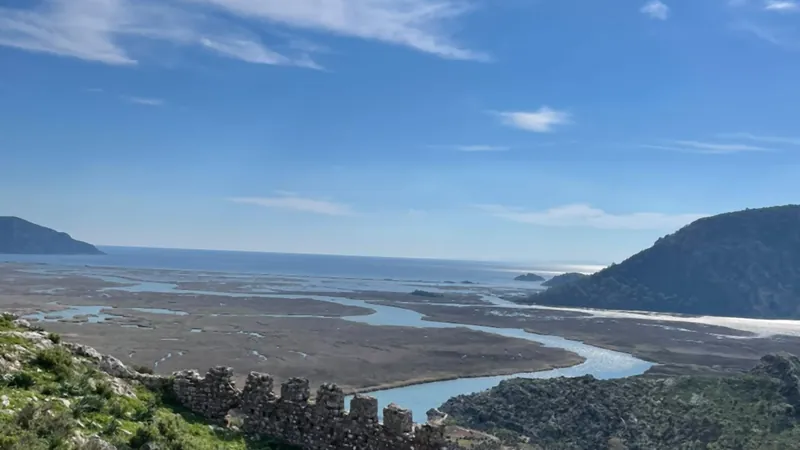
Kaunos was a working port. Ships tied up where there are now reed beds and fields, and the city taxed what passed. Today the sea is about four kilometres away and the old harbour is a lake behind a sandbar.
That single fact is the whole history of the place. Everything else — the theatre, the tombs, the walls on the ridge — happened in the centuries while the water was still there.
Who the Kaunians were
Herodotus, writing in the fifth century BC, says the Kaunians were native Carians who nevertheless insisted they had come from Crete. He also notes that their language and customs set them apart from their neighbours.
The founding story the Greeks told is a family tragedy: Kaunos, son of Miletos, left home because his twin sister Byblis loved him, and founded a city here. It is a legend, not a record, but it tied the place into a wider Greek world.
Archaeology pushes settlement here back much further than any of that, with traces running to around the tenth century BC and probably earlier. The city you can walk through is the late-classical and Roman version of a much older place.
A harbour you could close
The geographer Strabo describes Kaunos as having a shipyard and a harbour that could be shut. That detail matters: a closable harbour is a defensible one, and it is also a taxable one.
The city sat where traffic along this coast had to pass. It exported salt fish, figs and slaves, and it charged for the privilege of using the anchorage.
The wealth that cut temple fronts into a cliff came from that position. Kaunos was never a large city; it was a well-placed one.
The reputation for sickness
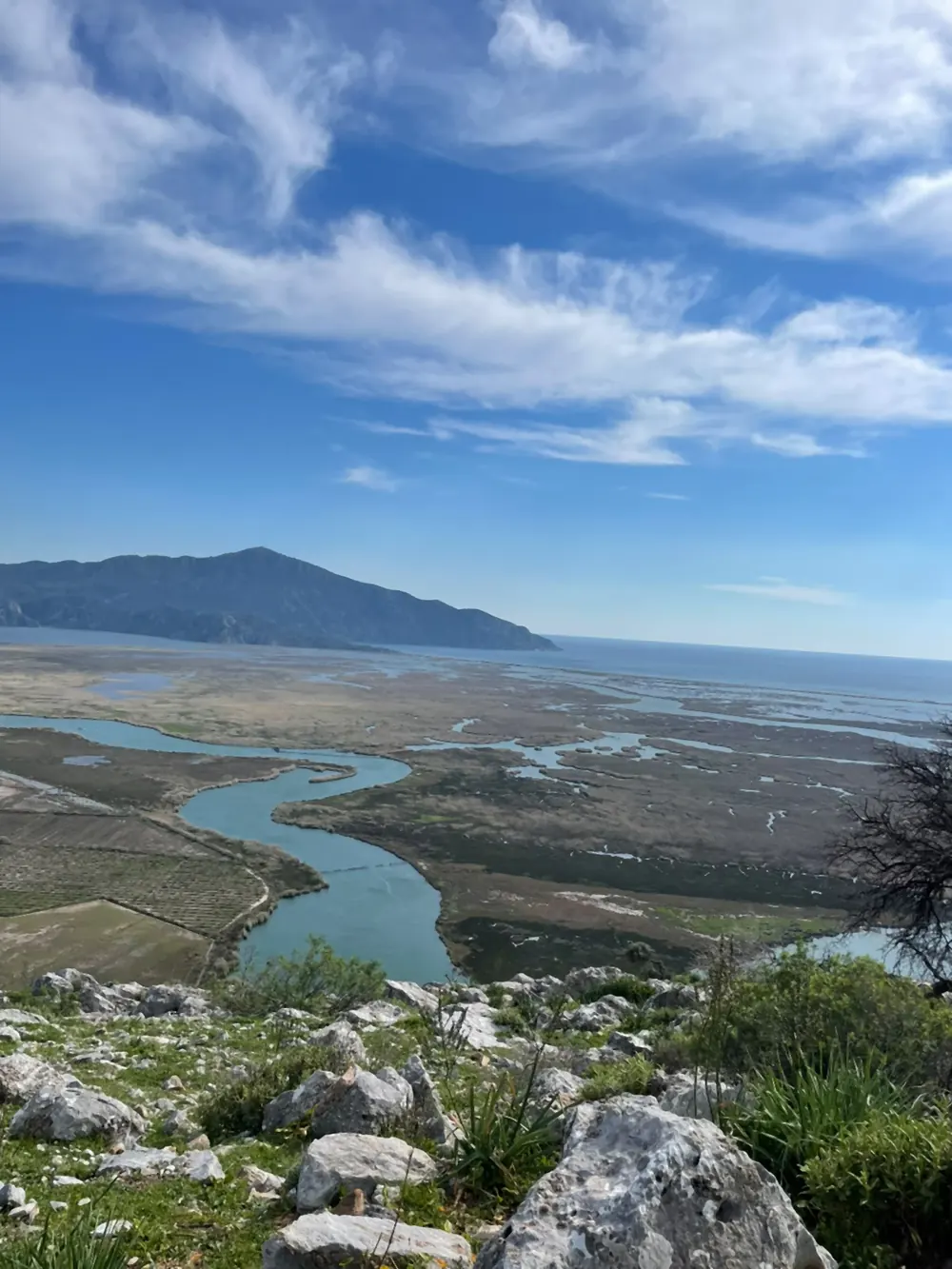
Ancient writers describe the Kaunians as unhealthy and sallow, and the phrase that survives in Turkish describes them as green-complexioned. The marshes around the harbour were malarial, and the city lived with it.
There is a story, probably more pointed than true, of a visitor telling a Kaunian that his town looked ill, and being told that at least it was not short of figs. The joke only works if the reputation was real.
Malaria was still a serious problem in this delta well into the twentieth century and was finally broken by mosquito control in the late 1940s. The marsh that made the city rich also made it sick, and that is not a metaphor.
How the harbour died
The river that made the anchorage useful also fed it with silt. Every flood brought sediment down from the hills, the bay shallowed, and the shoreline crept outward.
By the Roman and Byzantine periods the problem was severe enough that the harbour needed constant work. Eventually there was no harbour left to maintain, only a lagoon cut off from the sea by a growing sandbar.
That sandbar is Iztuzu beach. The delta a boat threads through today is the city's drowned economy, converted into reed beds and fish traps.
The fishery that outlived the city
The name Dalyan means a fish weir: a line of stakes and funnel traps set across a channel to catch fish moving between the lake and the sea. It is the same resource that fed ancient Kaunos.
Grey mullet and sea bass make that journey, and the trap system has been worked here for a very long time. The town took its name from the technique, not the other way round.
So the city is a ruin and the industry is not. Of everything Kaunos had, the fishery is the part that is still running.
What was dug up and when
Systematic excavation began in 1966 under Professor Baki Ogun and has continued since. The theatre, the baths, the terrace buildings and large stretches of the city wall have been cleared and studied.
Inscriptions found at the site have been particularly useful, including material on the port customs arrangements. For a small city, Kaunos has produced a lot of documentary evidence.
Work is ongoing, which is the normal state of a Turkish excavation. What you walk through is a site in progress, not a finished exhibit.
A short timeline
- Tenth century BC and earlier: settlement on the hill.
- Fifth century BC: Kaunos is a known Carian city; Herodotus writes about its people.
- Fourth century BC: the theatre and the great rock tombs are cut.
- Roman period: baths, terrace buildings, continued trade, continued silting.
- Byzantine period: a shrinking harbour, a church, then decline.
- 1966: modern excavations begin.
- 1988: the delta and Iztuzu are declared a protected area.
Why it is worth knowing before you go
Because the site makes no sense without it. A theatre on a hillside above a plain is a curiosity; a theatre above a vanished harbour is an explanation.
Stand on the acropolis and look south, and the history is laid out in front of you: the bay, the bar, the sea pushed back four kilometres. You do not need a sign to read it.
The tombs face the water for the same reason. They were meant to be seen by people arriving by ship, and the ships are the only part of the scene that is missing.
Frequently asked questions
Who founded Kaunos?
Greek legend credits Kaunos, son of Miletos, who left home after his twin sister Byblis fell in love with him. Archaeologically, settlement on the site goes back to around the tenth century BC or earlier.
Why did Kaunos decline?
Its harbour silted up. River sediment shallowed the bay over centuries until the port was cut off from the sea by a sandbar, which is now Iztuzu beach.
Were the Kaunians Greek or Carian?
Herodotus describes them as native Carians who claimed Cretan descent. The city was heavily Hellenised over time, which is why its tombs copy Greek temple fronts.
Why were the people of Kaunos called green?
Ancient sources describe them as sallow and unhealthy, a reputation linked to the malarial marshes around the harbour. Malaria persisted in the delta until mosquito control in the late 1940s.
When was Kaunos excavated?
Systematic excavation began in 1966 under Professor Baki Ogun and continues today. The theatre, baths, terrace buildings and city walls have been cleared and studied.
You may also want to read
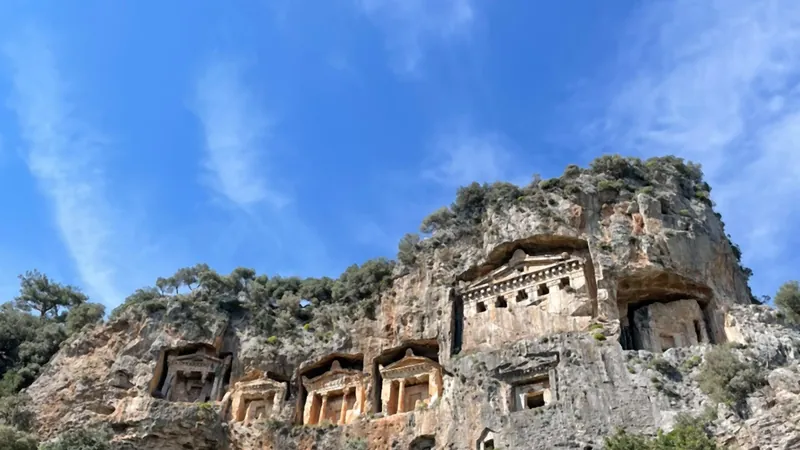
Visiting Kaunos: the Ancient City Behind the Rock Tombs
Everyone photographs the tombs from the river. Far fewer cross over and walk up to the city they belong to.
Read more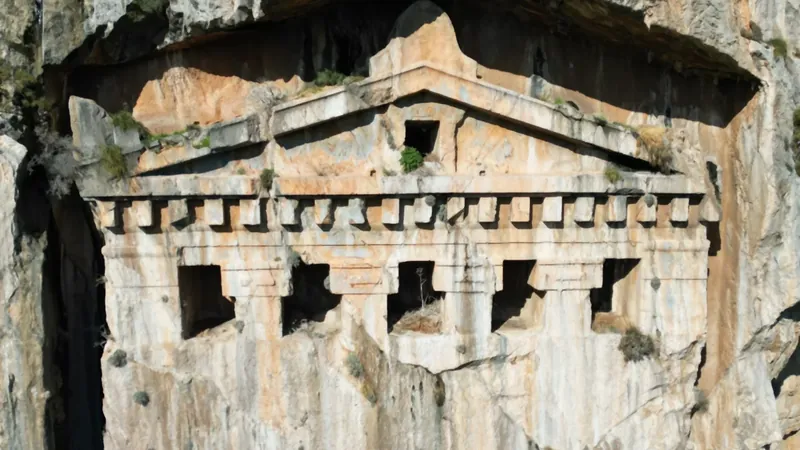
The Kaunos Rock Tombs Up Close: How They Were Cut and Who They Were For
From the river they are a skyline. From the path below they are a building site that stopped mid-job.
Read more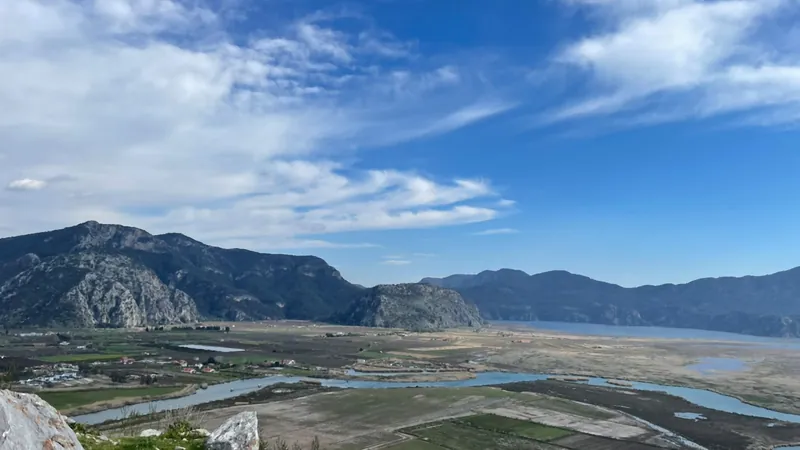
The Climb to the Kaunos Acropolis and the View That Explains Everything
Most people stop at the theatre. The hour above it is the part of Kaunos that stays with you.
Read more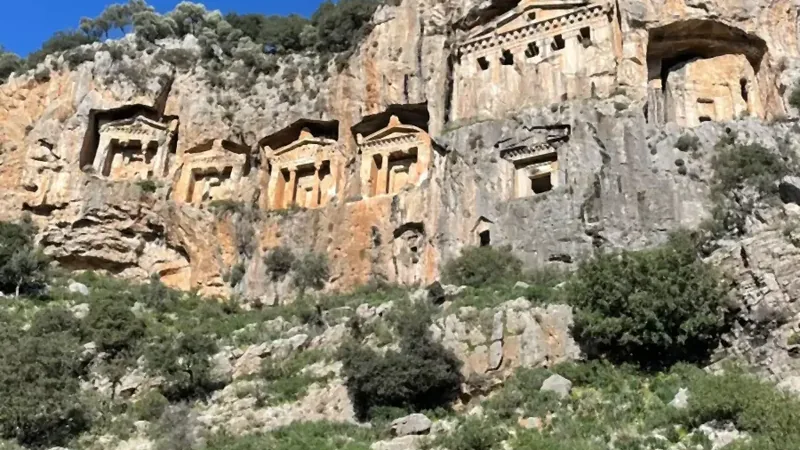
Kaunos and the Rock Tombs
Temple fronts cut into a cliff, and a harbour city the river silted up and stranded.
Read more
Beyond the Turtles: Birds and River Life in the Dalyan Delta
Everyone looks for the loggerheads. Here is the rest of the river, and how to see more of it from the deck.
Read more